
Let’s start this journey
“How might we let crowd control play a digital role in scare mazes to prevent conga lines and high workloads?”
the crowd monitor
Walibi Holland, Toverland, Slagharen, Hellendoorn, they all celebrate Halloween which bring in thousands of guests and my monitoring system provides greater control and overview of capacity requirements by bringing together real-time data, user- and business needs.
Motivation & context
The client
Dreamagine Creations specializes in designing amusement parks and realizing thematic experiences.
Scare Maze
A Scare Maze is a type of walkthrough attraction which manifests its entertainment value through various scares positioned on the way.
!
Problem statement
Visitors often experience conga lines, diminishing their overall satisfaction and potentially leading to negative reviews while employees have all hands on deck to maintain the flow.
Goal statement
Innovating crowd control inside scare mazes to provide a greater control and overview of visitor flows to better anticipate on in-moment capacity.
the finishline
Design result
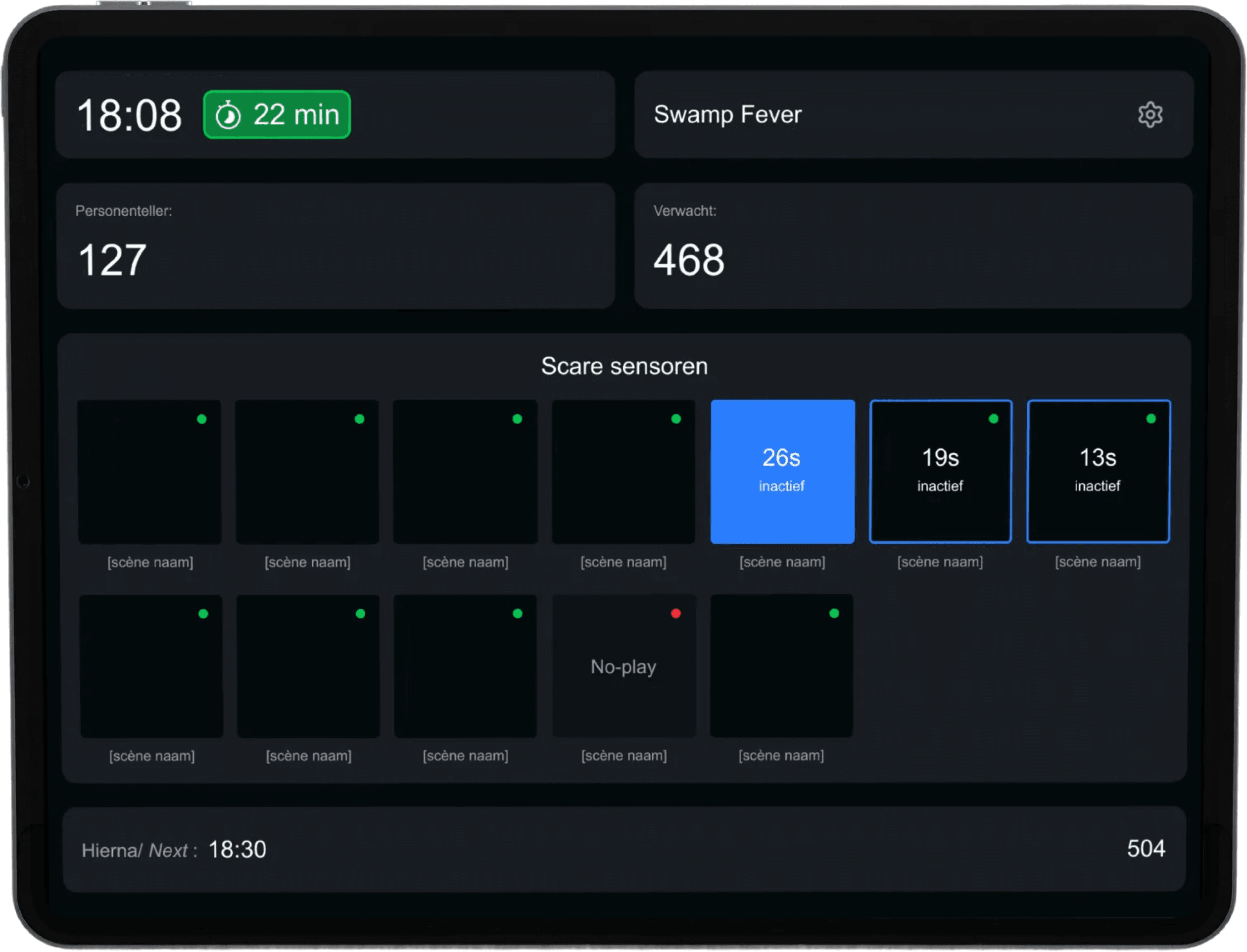
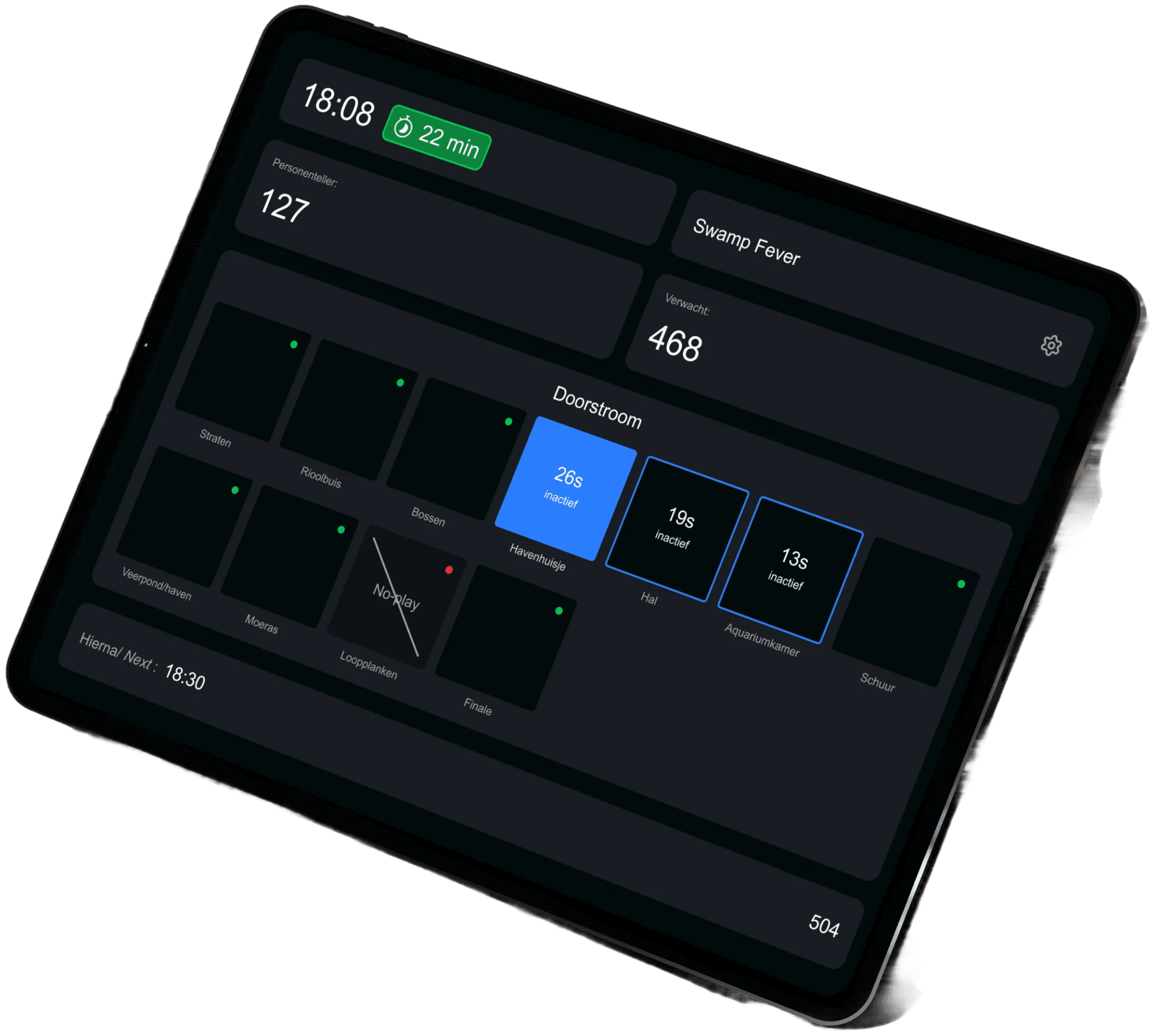
The crowd monitor
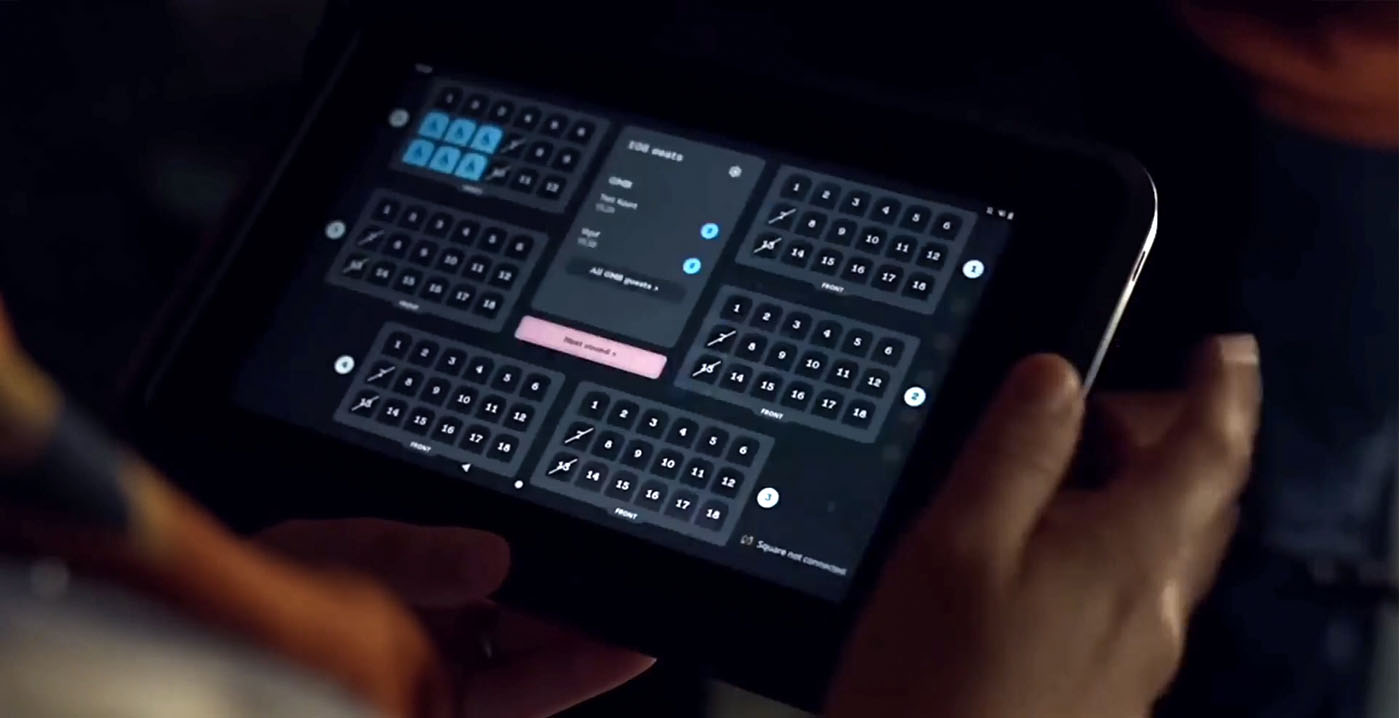
An informative/
non-interactive tablet
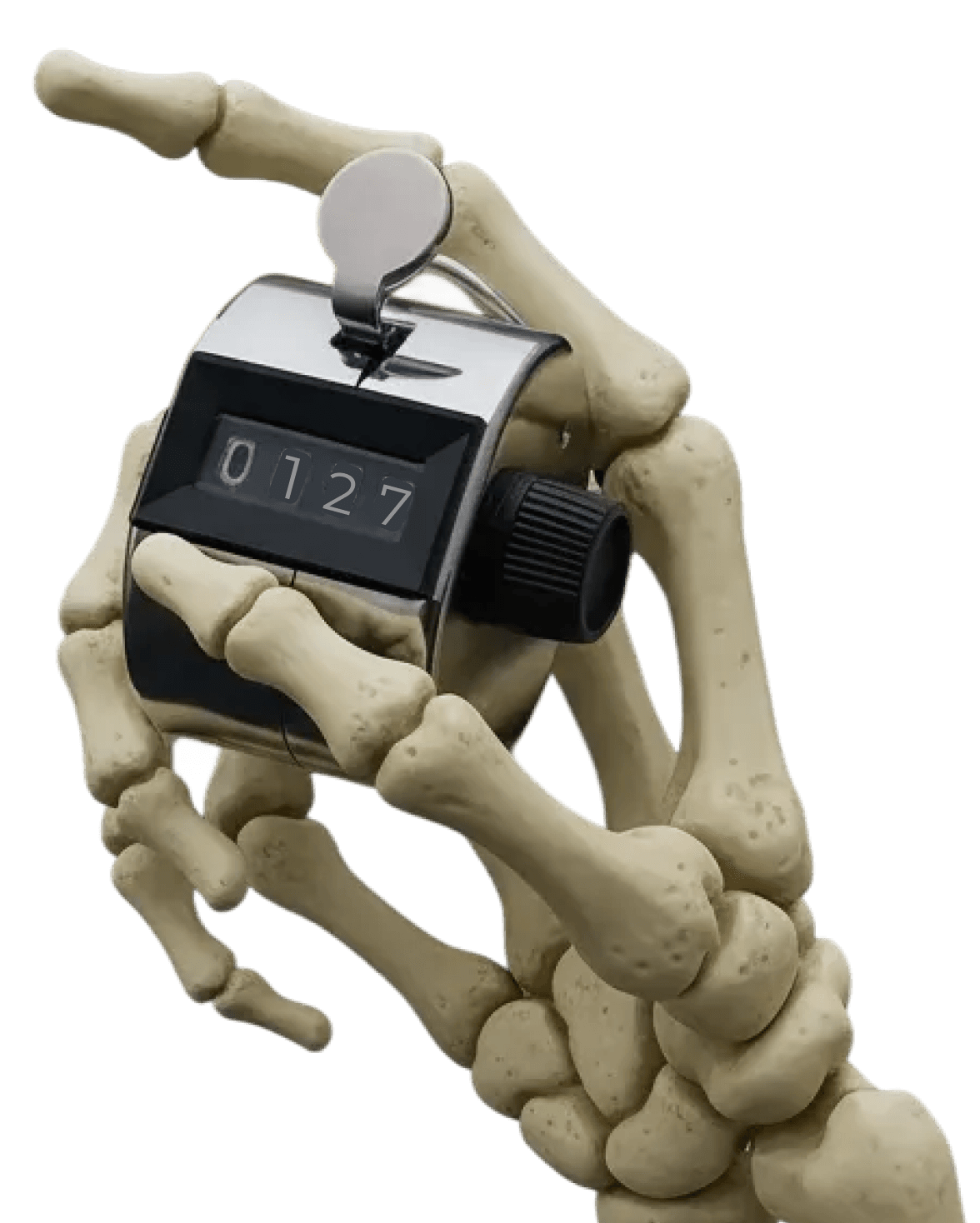
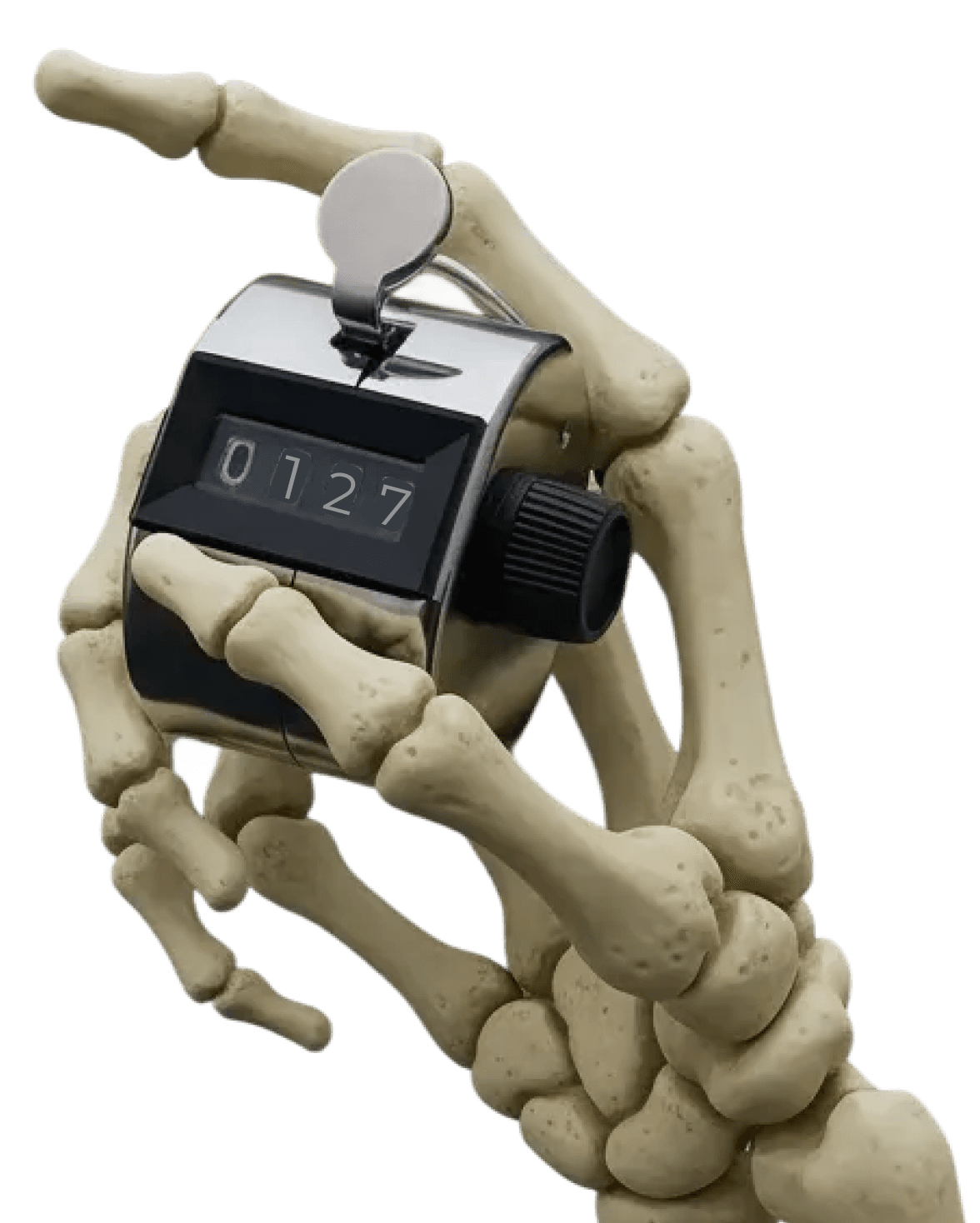
Used by the grouper
while counting visitors
Co-creation
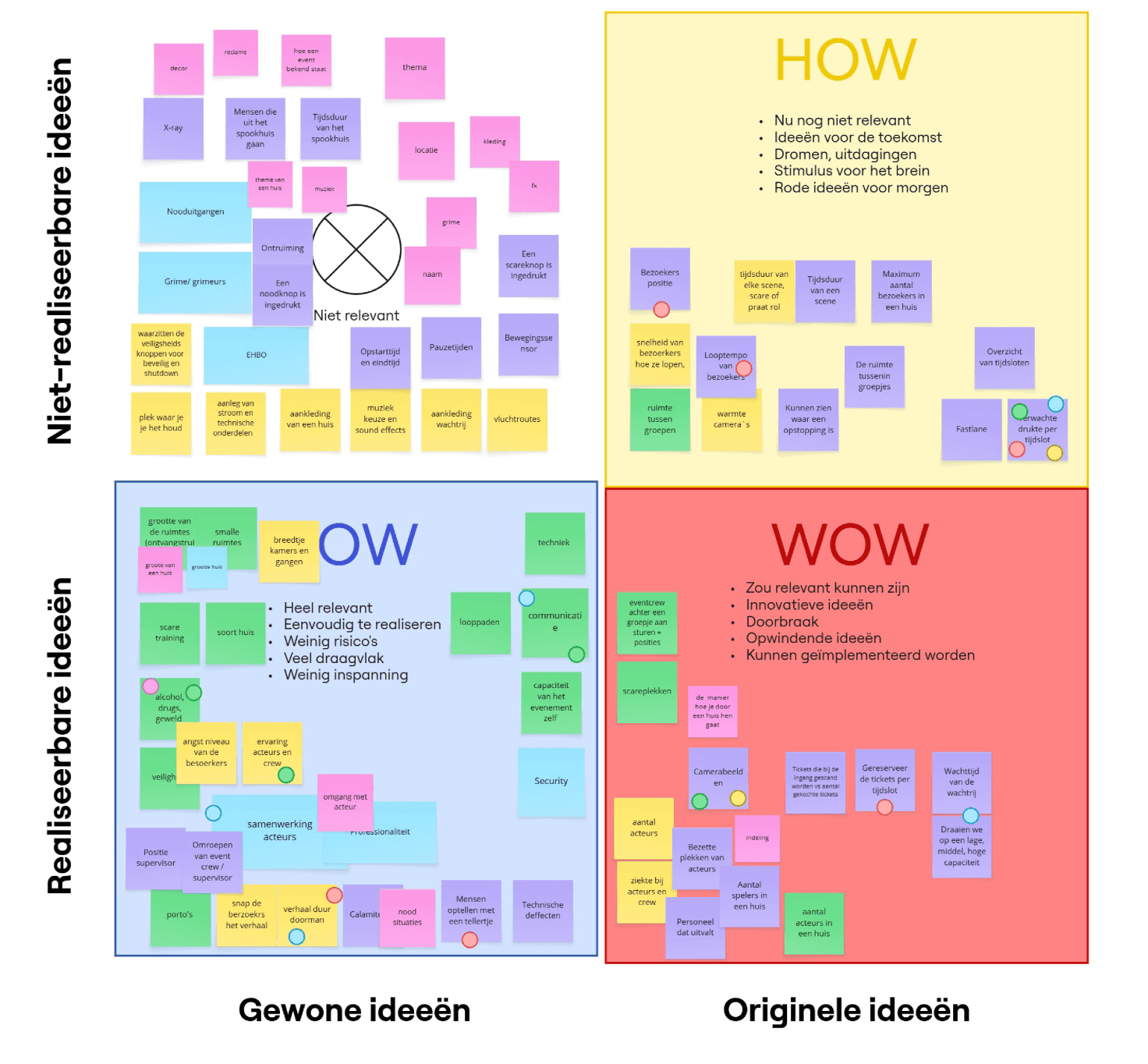
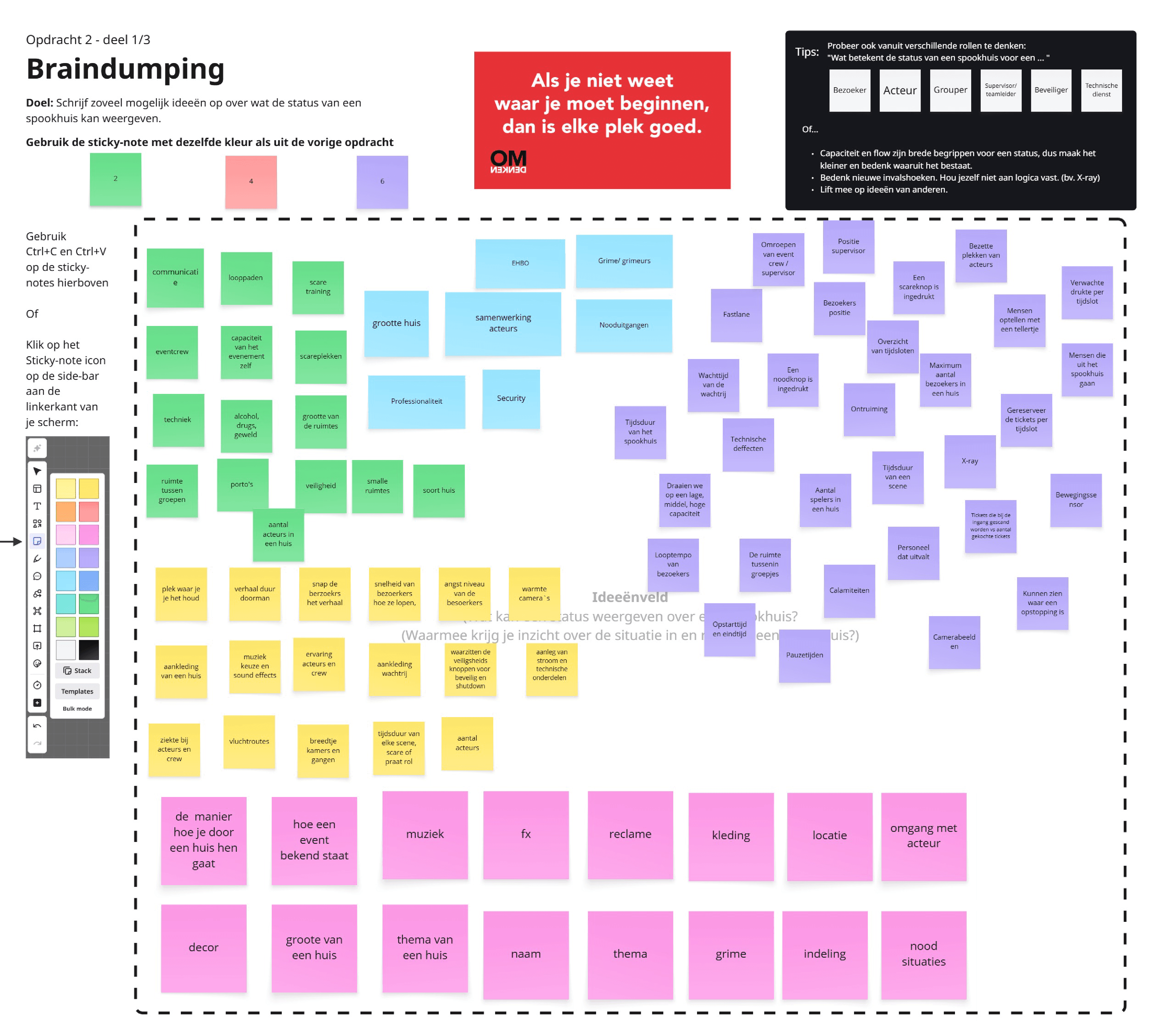
The goal is to identify which task from the workload needs digital support. By doing this together with 4 groupers allowed me to tailor the concept to their needs. Within an hour and a half, we would first conduct a Braindump, COCD Box and solution sketches with several voting rounds, like Dr. Love.
Numbers like these help groupers to
anticipate on capacity requirements and flow speed

ideation
Co-creation, design principles, low-fidelity → high-fidelity
Components of a time slot
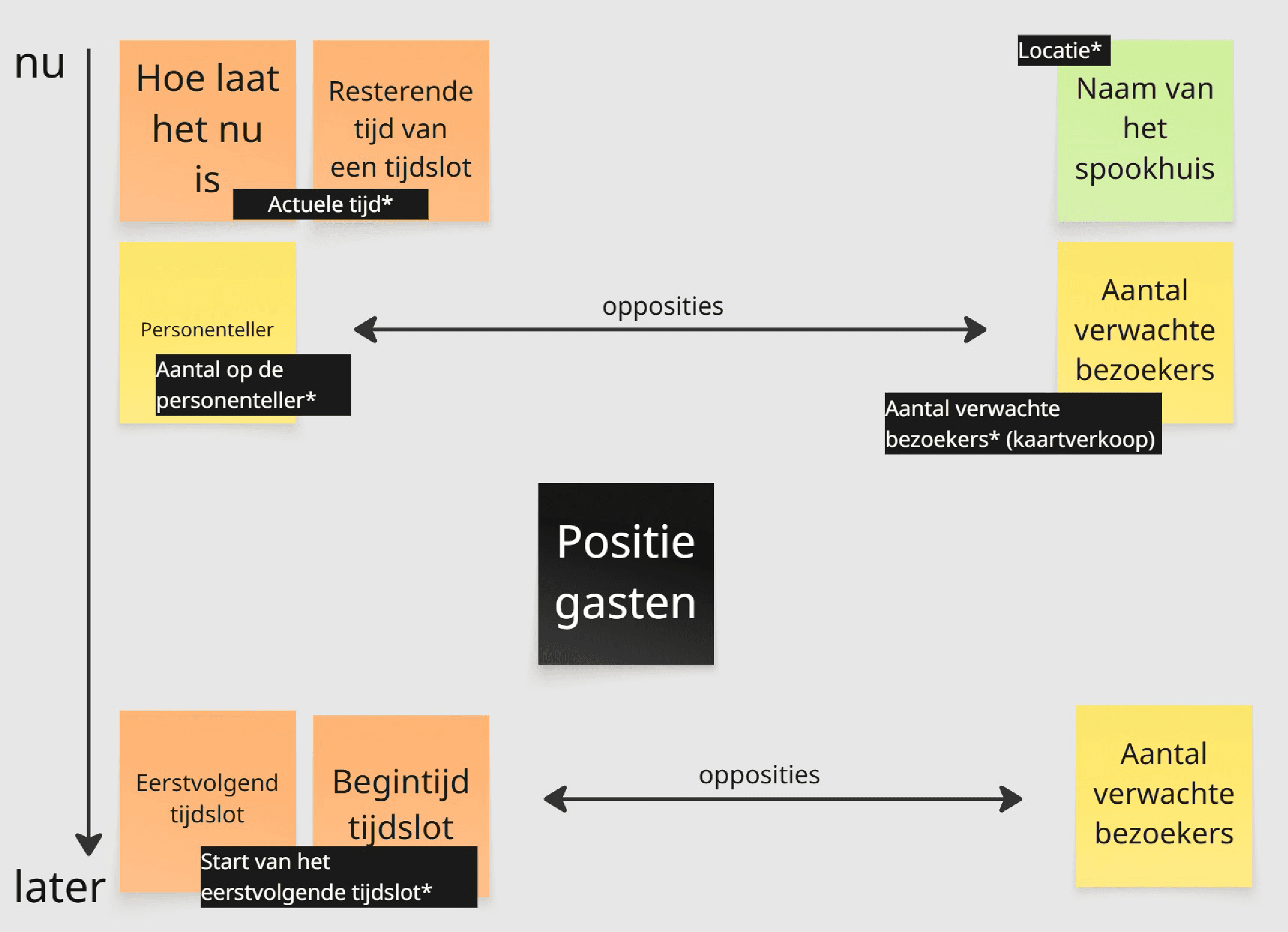
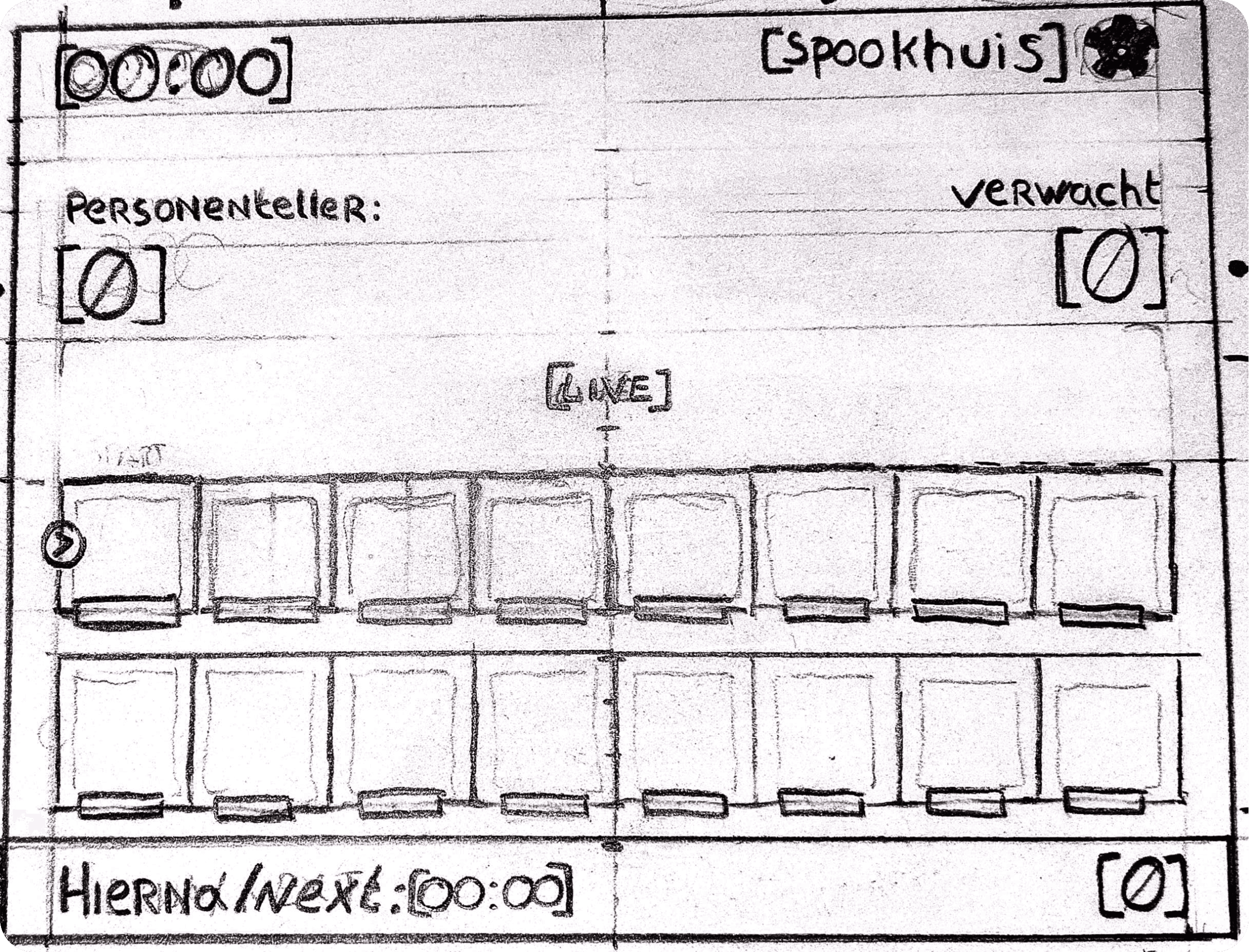
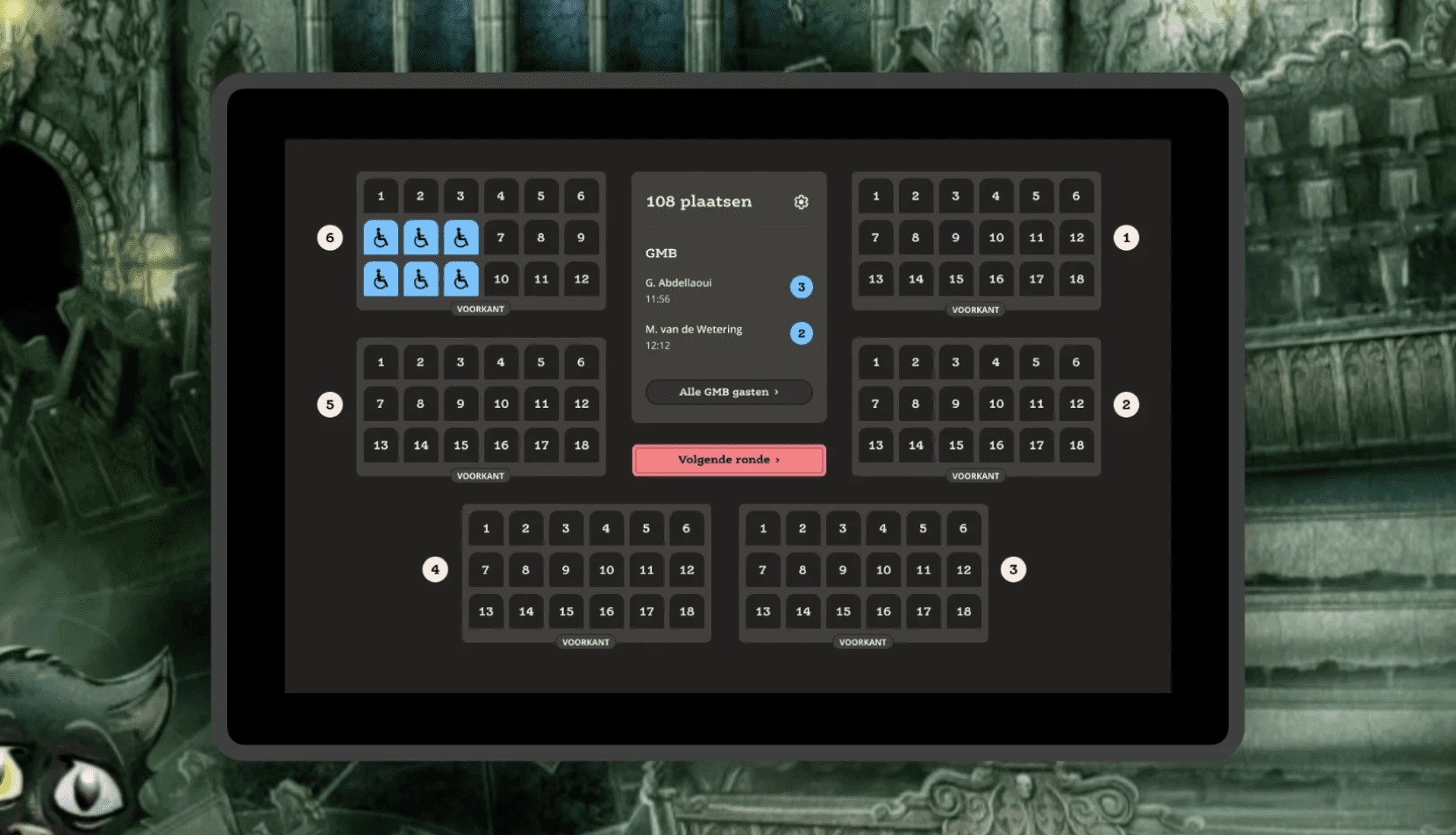
The content of a timeslot according to groupers from top to bottom: Time/remaining & location, crowd numbers (sold tickets), guest positions in the scare maze, and the start of the next time slot. This fits their behavioural pattern of checking visitors.
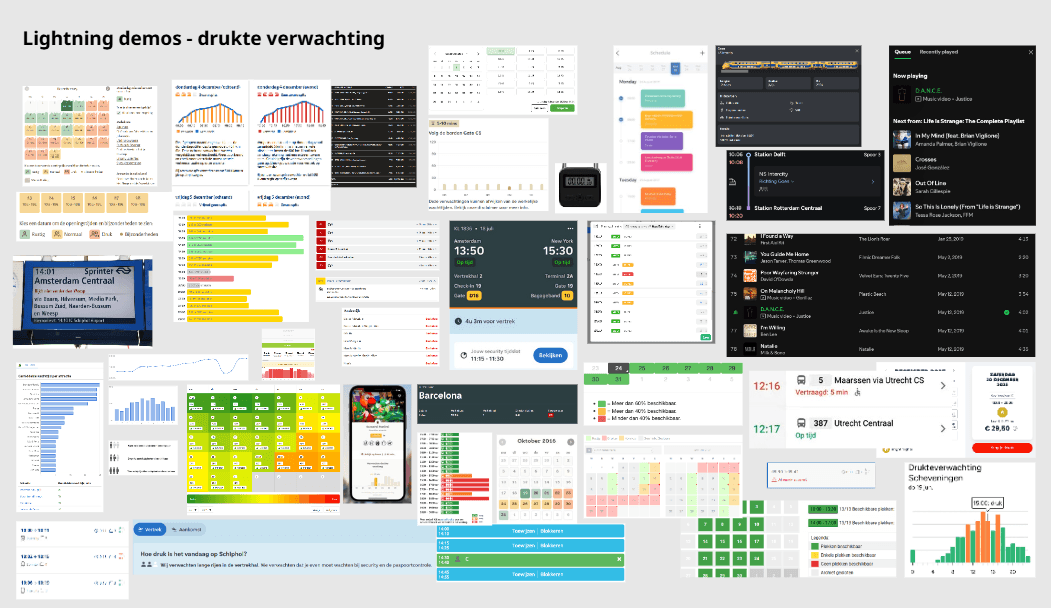
An (ex-) product owner of the Efteling and a lead designer of Glamorous Goat whom worked on the Pre-Seater app that has similarities to my project, and lightning demo’s by participants of the co-creation inspired the design principles.
Design principles
Key insights
Autono-me
Give me the feeling that I'm making the right choices, no gibberish, be to the point, so that I can shine in my independence.
Design principle 1
Expand my reach
Make my actions visible to several people at once, instead of just one person, so we can all watch and learn from each other as we operate.
Design principle 2
Keep me going
Keep me informed, in real time, make sure I know what to do before it's too late. Situations are constantly changing and I want to stay focused.
Design principle 3
Walk the talk
Give me the freedom to be in multiple places at once and to give or follow directions from a distance.
Work with actions, not words.
Design principle 4
Enter my world
I want to behave according to my environment (and character), it has to fit that picture. Design has to be tuned to my environment.
Design principle 5
Praise
‘As a stakeholder, I think it's a smart concept. Well-developed. It also takes into account the needs of the employees on the workfloor, as well as those of the organizations themselves.’
Luke Verhoeven, Entertainmentmanager at Attractiepark Toverland
‘I'm quite impressed. It looks very practical. Not too complicated, and I like that! So I really think it's seriously worth it.’
Paul Nelissen, executive producer at Aniba Entertainment for Attractiepark Slagharen
‘It's definitely something that has potential for future scare mazes and perhaps even existing ones.’
Eelco Hövens, event coordinator at Avonturenpark Hellendoorn
At Dreamagine Creations we are working on realising the crowd monitor!
A/B test results
Scalability and feasability
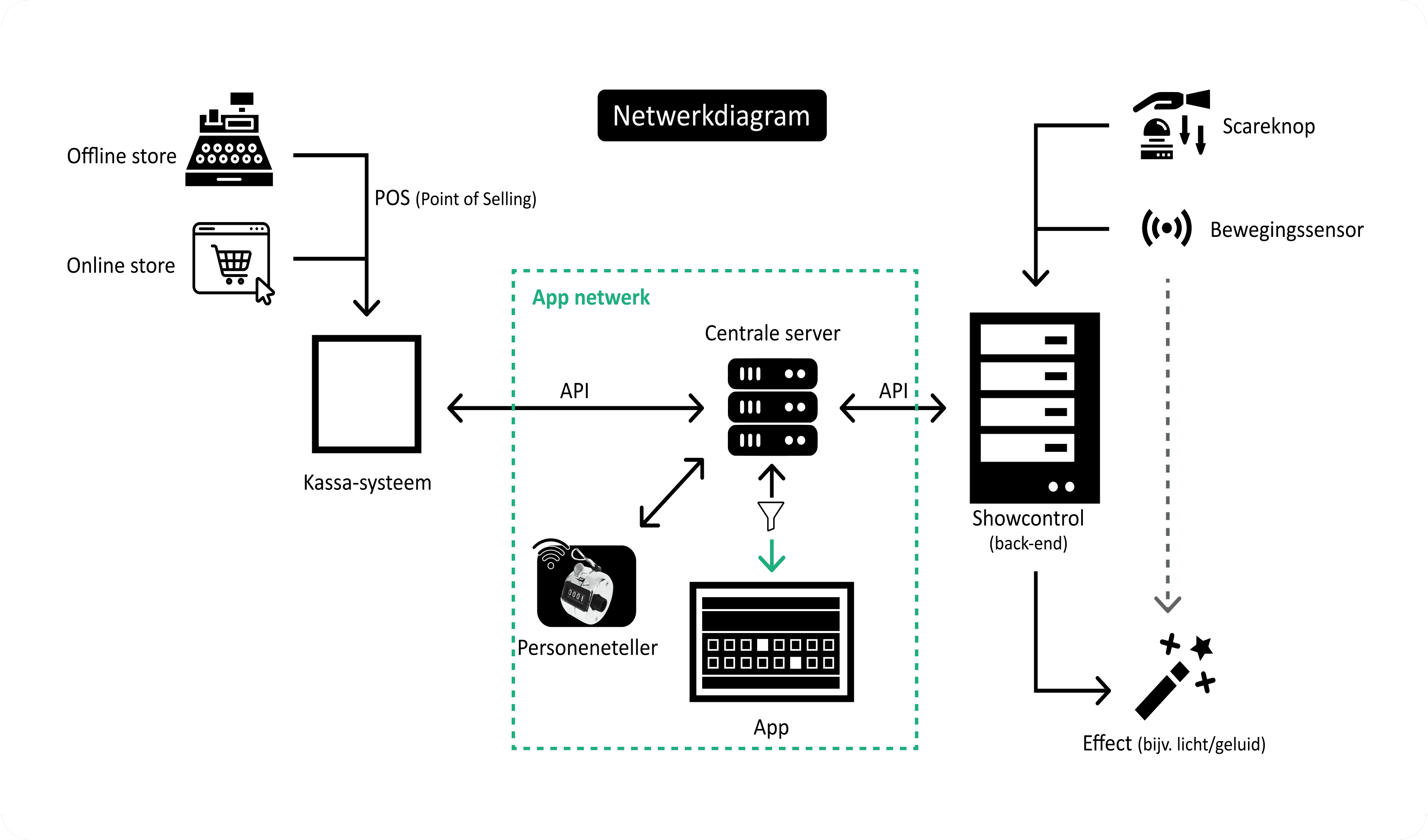
For the monitor to work, advice was given by stakeholders from themeparks and developers alike in the ways of a network diagram.
For example, real-time ticket sales data proved to be incredibly important. It was estimated that an API connection to the ticketing system is feasible.
Furthermore, establishing the connection between sensors and the app isn't impossible, but it does depend on the technical status of a scare maze, such as the aging of systems.
The long awaited result!
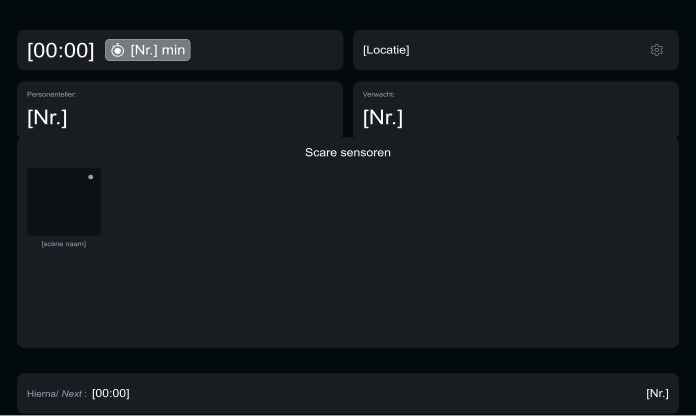
A crowd monitor
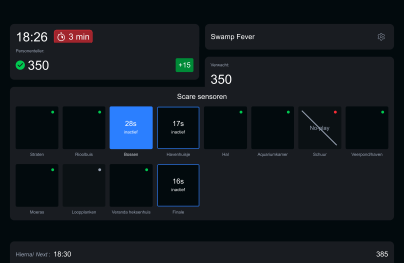
A dashboard that provides greater control and overview of expected visitors and supports visitor flow.
This informational/non-interactive screen brings together real-time data, user and business needs relevant to anticipating capacity requirements.
It aims to eliviate the grouper's workload and responsibility for maintaining the safety of their colleagues (actors) and create an immersive experience that’s worth paying for.
Current time slot
Counted visitors
To keep track of
the visitors vs
sold tickets
Sold tickets
To check the
amount of
expected visitors
Walking route
Overview of all active &
inactive sensors and
operational buttons
Next time slot
Location & settings
Showscene
A room in a
scare maze
Variants
After 0 min
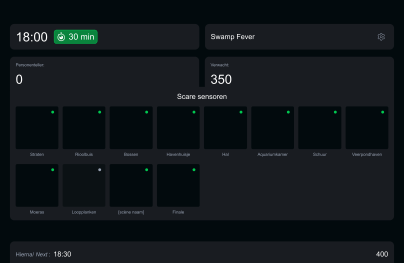
After 8 min
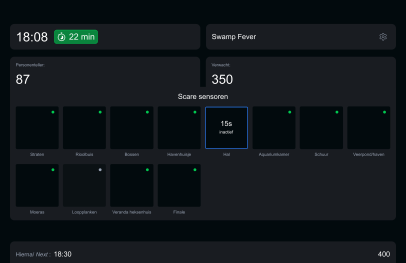
After 27 min
Explanation scare sensors
Default state
Not connected to a sensor
|
When there is no connection between sensor and server or a sensor is missing
Default state
60% opacity
Active state
Connected to a sensor
|
When there is a connection between server and sensor
Active state
100% opacity
No-play
No operator available
|
In case of staff absences and staff shortages.
No-play state
60% opacity
[0]s
Inactive1
No signal from sensor
|
When there is no signal after 15 seconds.
Short inactive state
[0]s
Inactive2
Long-term no signal from sensor
|
When there is no signal after 25 seconds and the next sensor is inactive, to locate the starting point of the inactivity.
Long inactive state
What did the target audience say?
“I have no time to wait. The remaining time needs to be as clear as day.”
“What is where? Positions and other reference points must be named after what it refers to.”
“Red is danger! It causes more panic than calmness to me.”
"My main focus are the visitors, so I need to be able to read information within a split second."
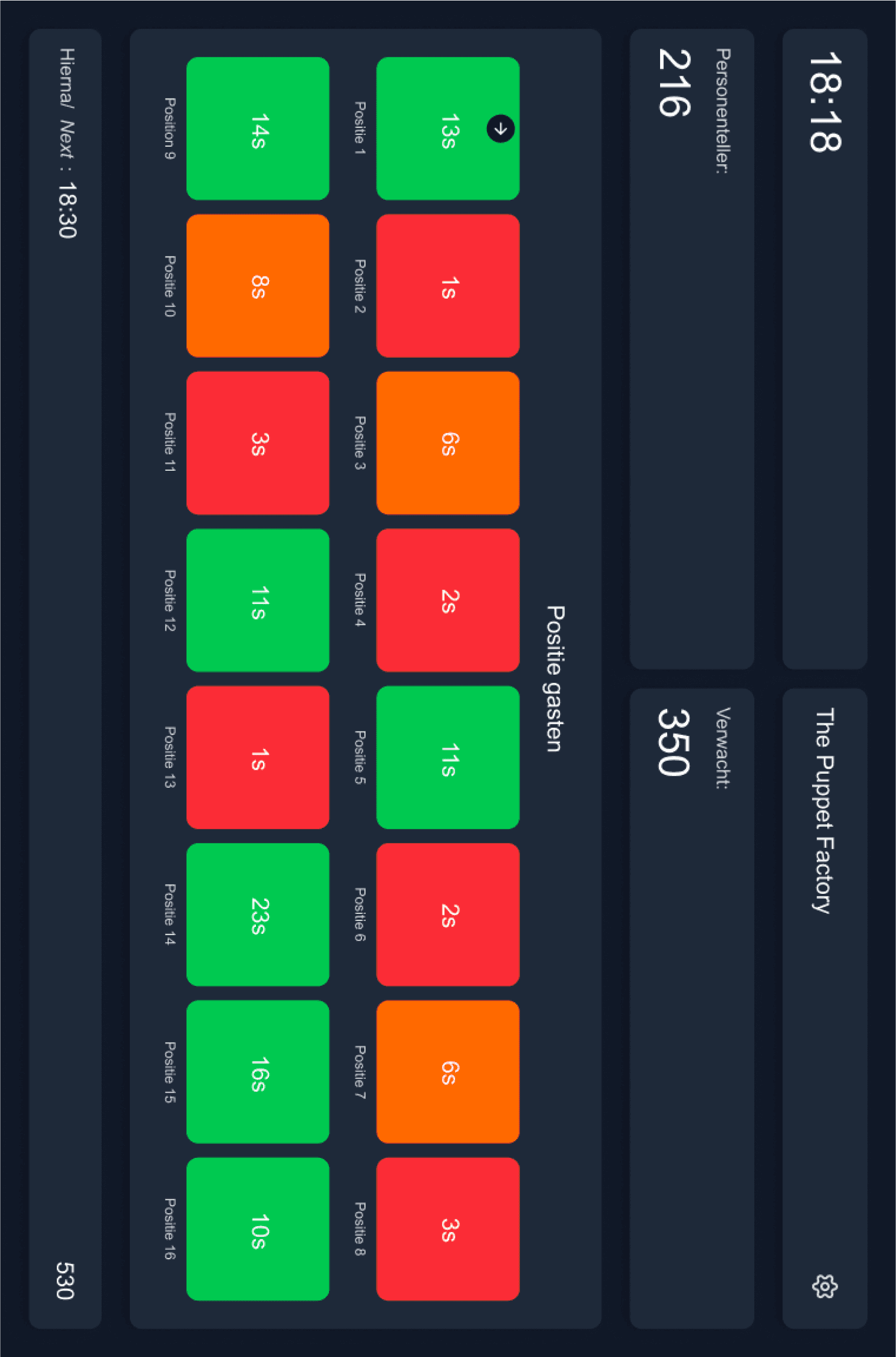
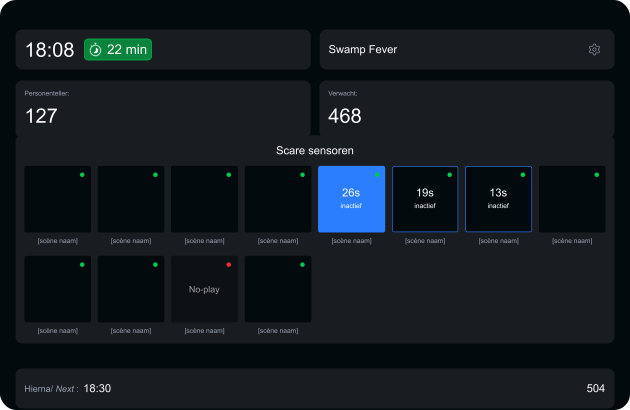
The new design is more concrete, visual and calmer, with better feedback mechanisms and less unnecessary information, making interpretation faster and clearer.
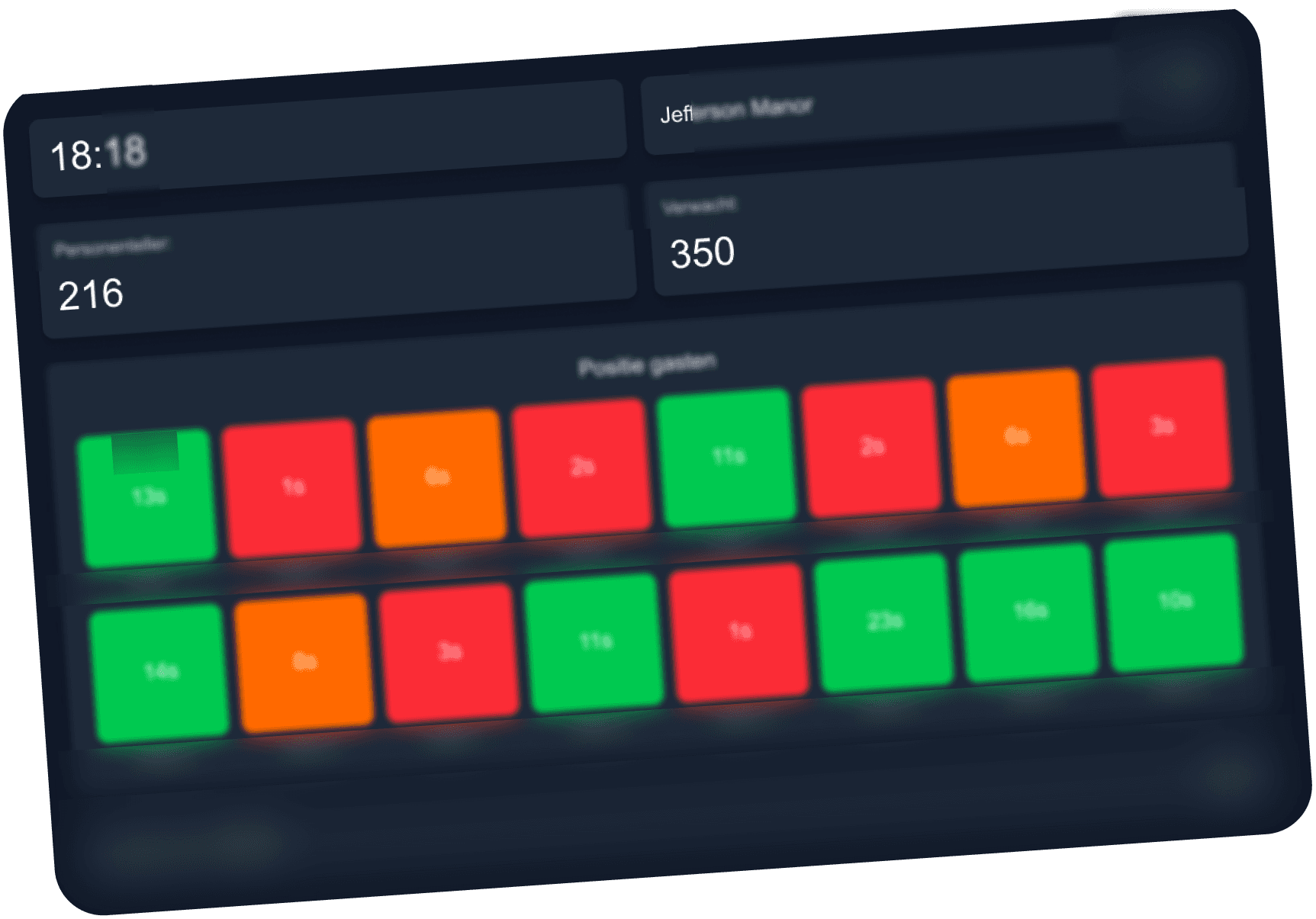
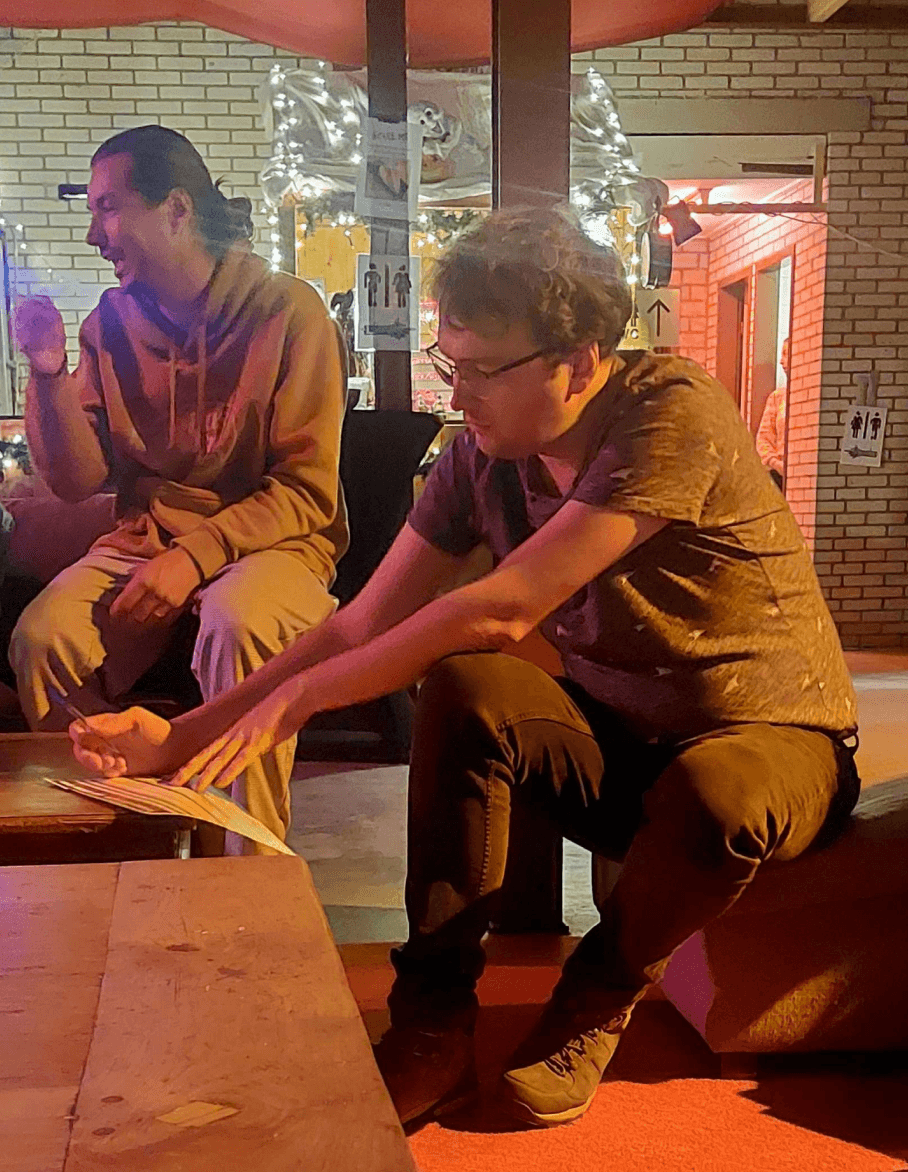
After a 5 second test with 12 designers
I blurred the dashboard and sharpened elements that test subjects remembered, saw, and described.
According to the results, they understand this is to monitor occupancy, but the usage of colors are perceived as confusing and intense and generally distract from other elements.
Ideally the design needs more calmness and cohesion.
+ 14 interviews
w/ actors
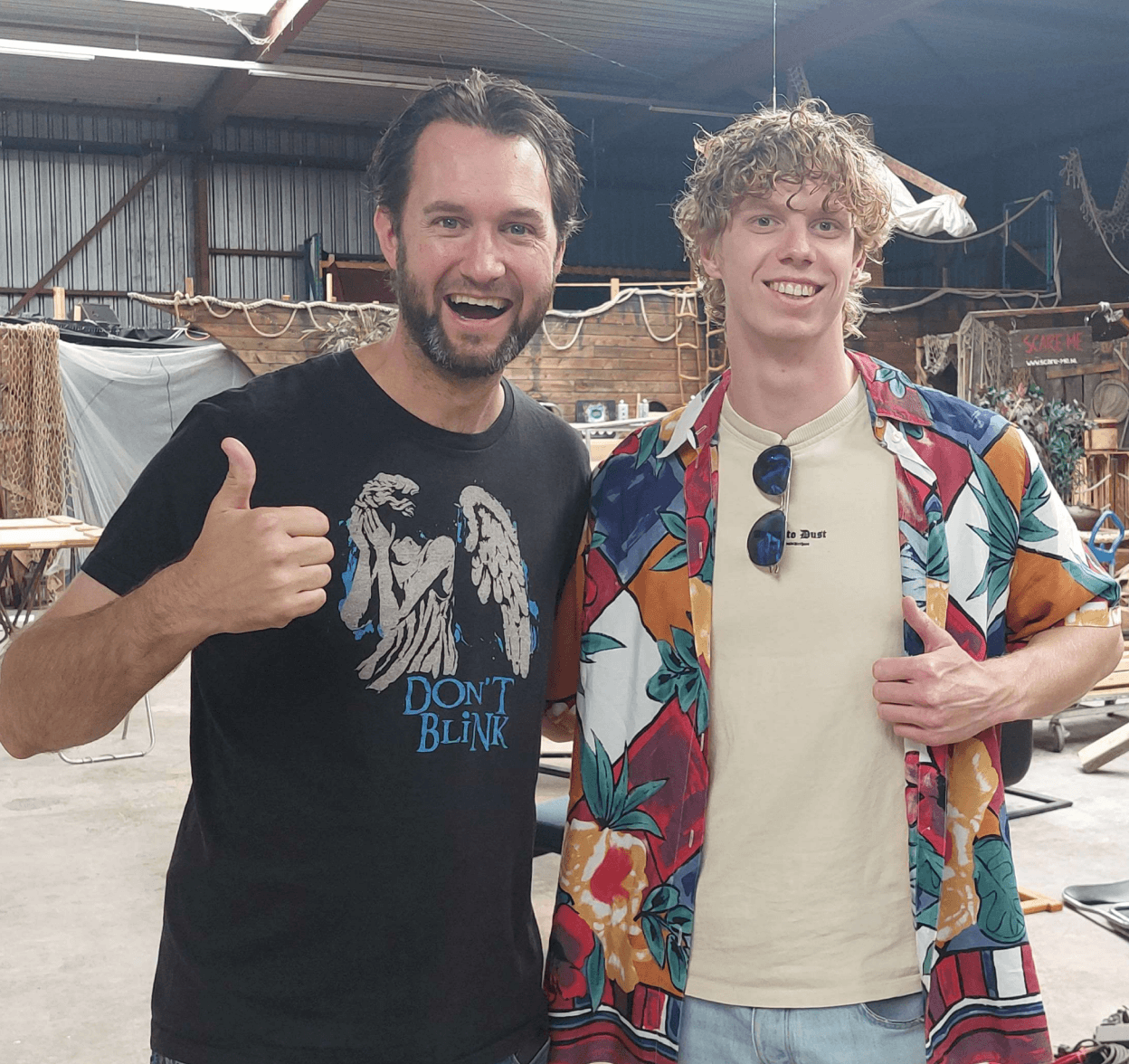
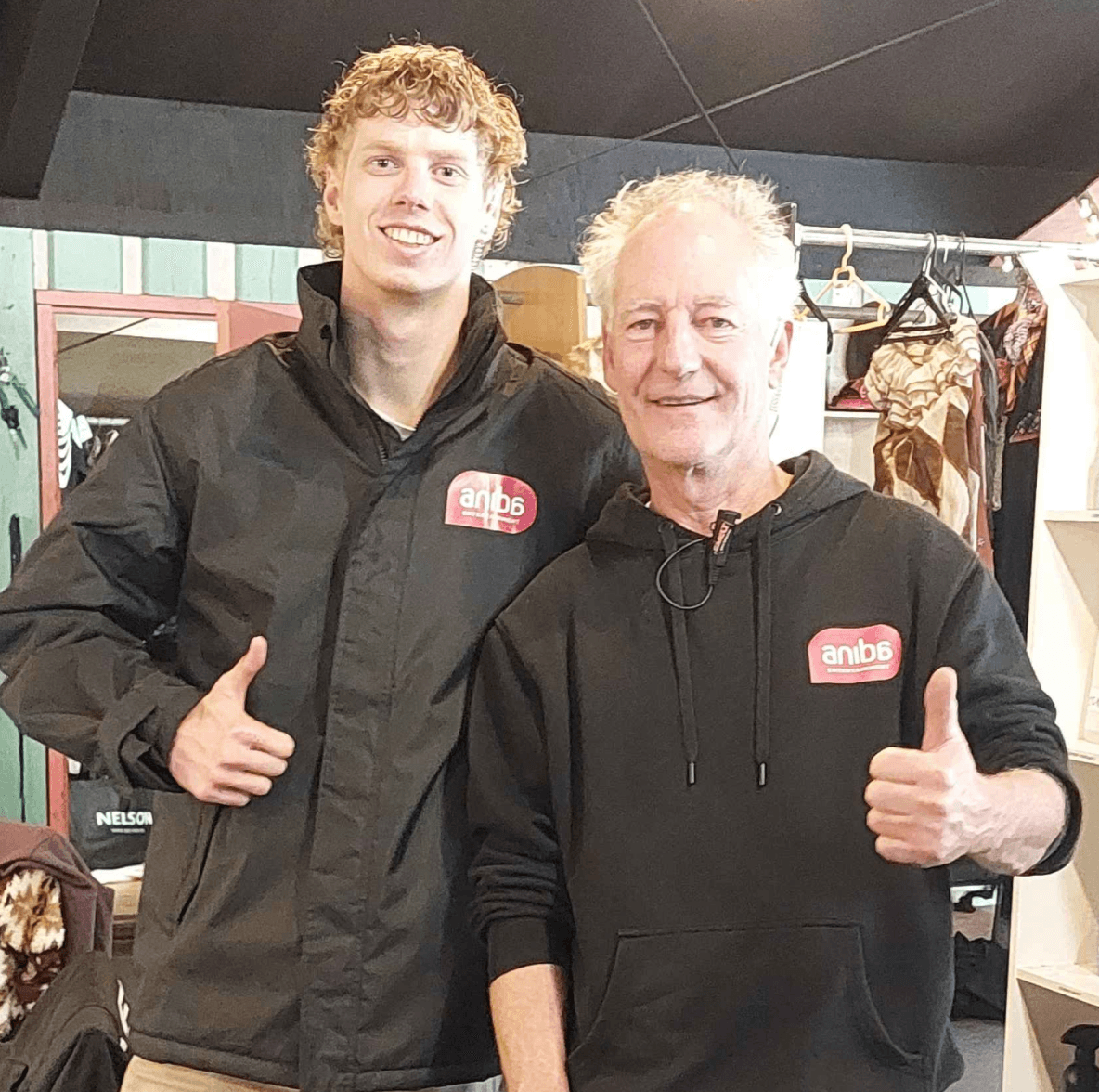
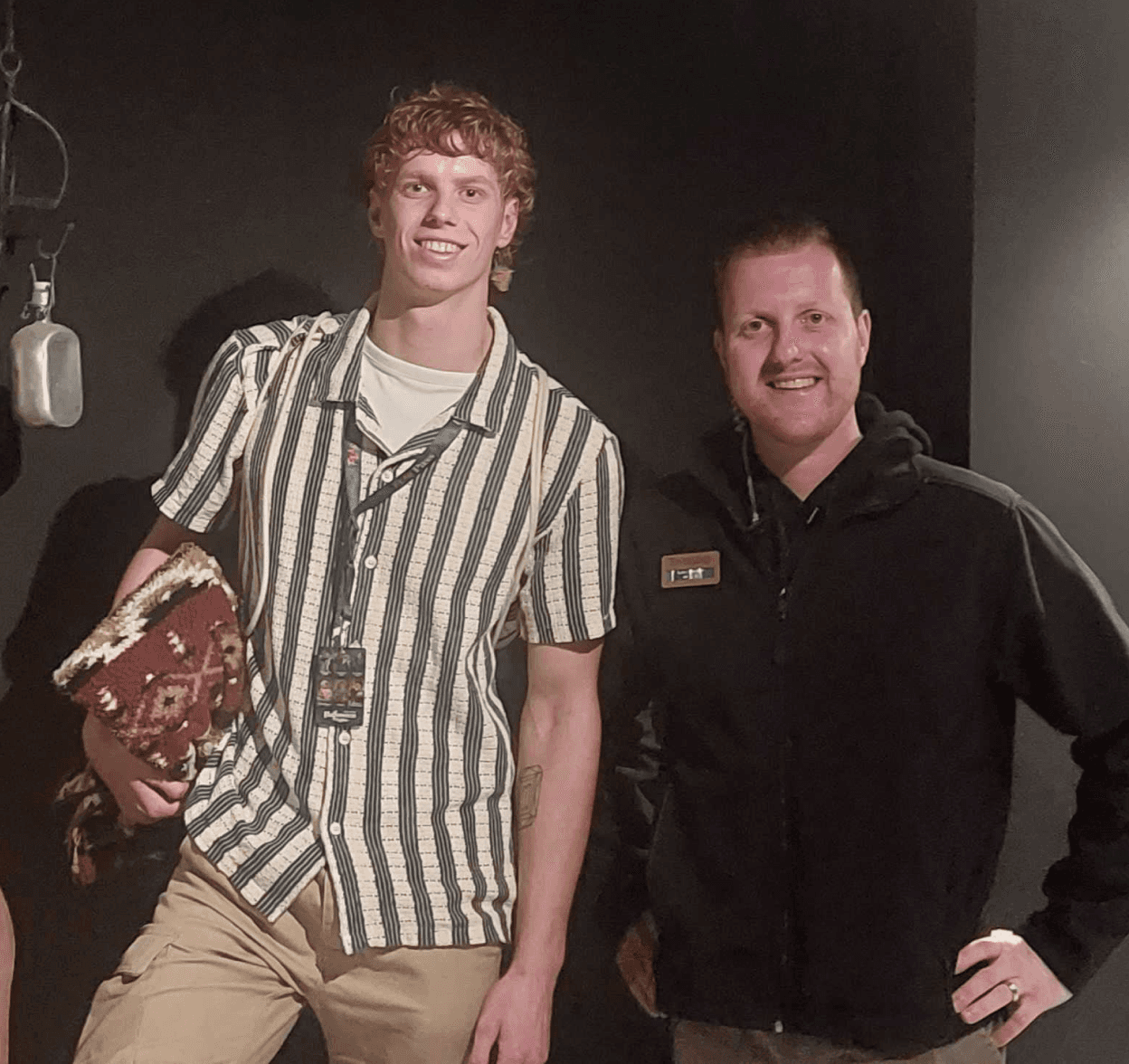
In-depth interviews with potential users and stakeholders
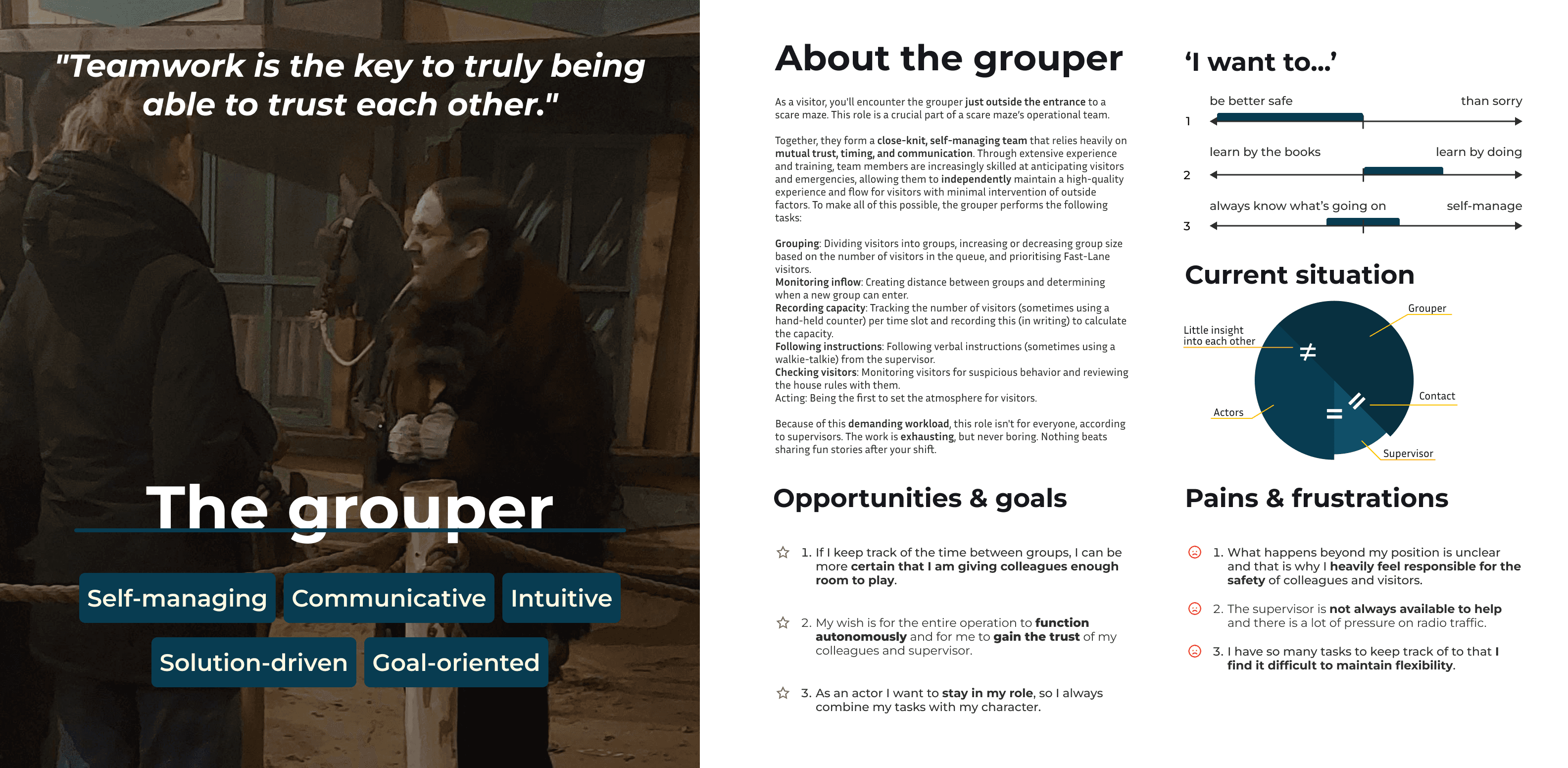
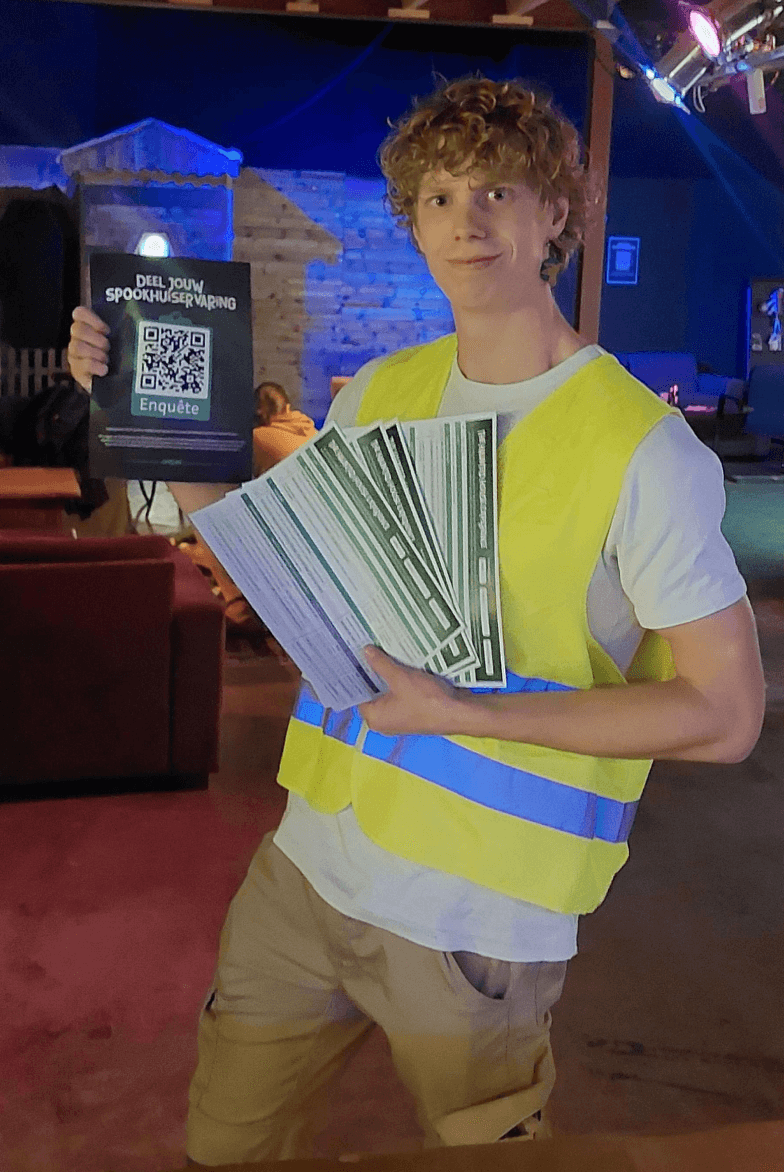
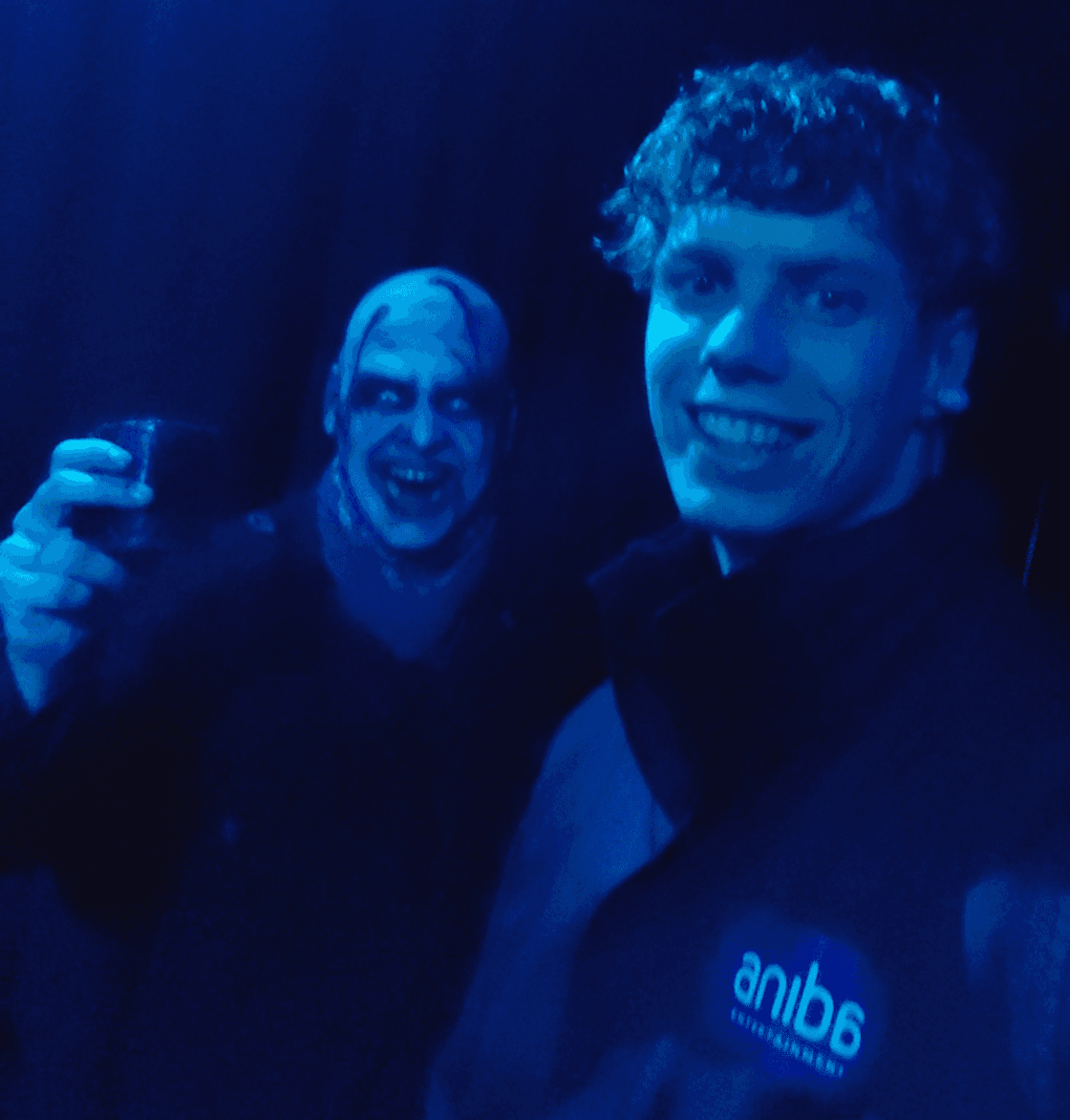
I learned about the work culture and methods from a dozen actors and expertinterviews with entertainmentmanagers and executive producers from themeparks such as Toverland, Slagharen and more about current capacity problems and needs.
Key insights
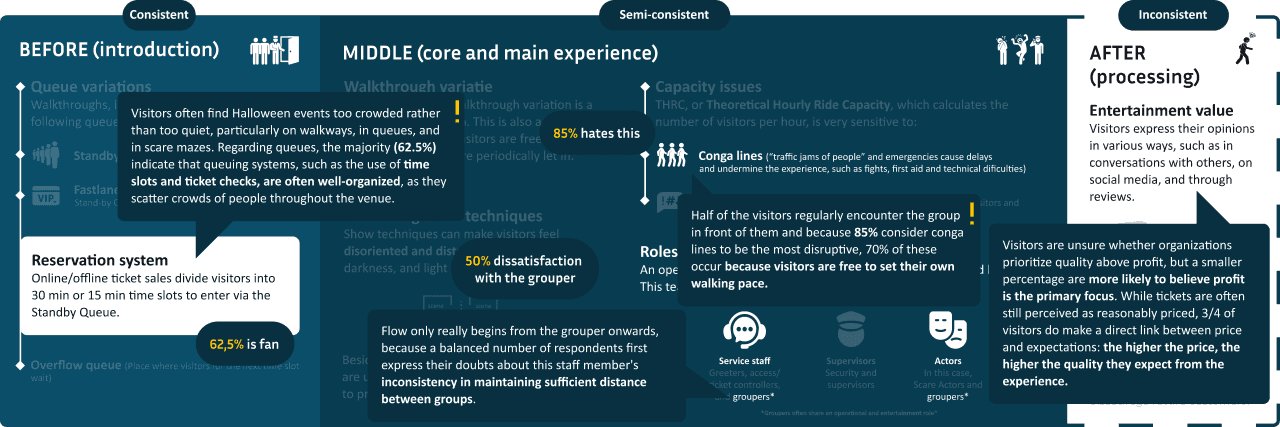
70% hate conga lines the most, but it occurs when visitors stand still and bump into each other
About visitor behaviour
62,5% is a big fan of the reservation systems as time slots create well-organized crowds
Defining the case
50% is dissatisfied with groupers to maintain a sufficient distance between visitor groups
Defining the case
Discover
Deskresearch, quantative research, interviews and observations
Current & Desired situation
High cognitive and physical demand for actors and supervisors alike such as anticipating on visitor behaviour
Current problem
A more transparent and accessible way of showing the operational status that lies less on direct communication
Desired situation
Deskresearch vs visitor experience
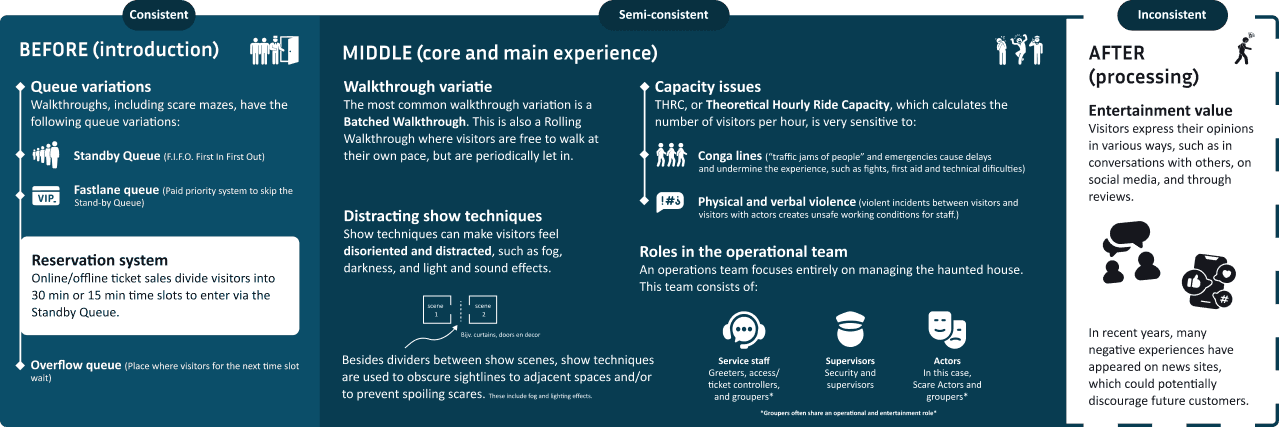
The following visual shows in which areas scare mazes have consistent, semi-consistent and inconsistent similarities with each other. This is achieved by researching 42 sources with David Younger’s ‘Theme Park Design & The Art of Themed Entertainment’ as my guide and translating these into the Dutch themepark environment with forms answered by visitors.

Deliver
Quantitative, qualitative and A/B Tests, high-fidelity, scalability